
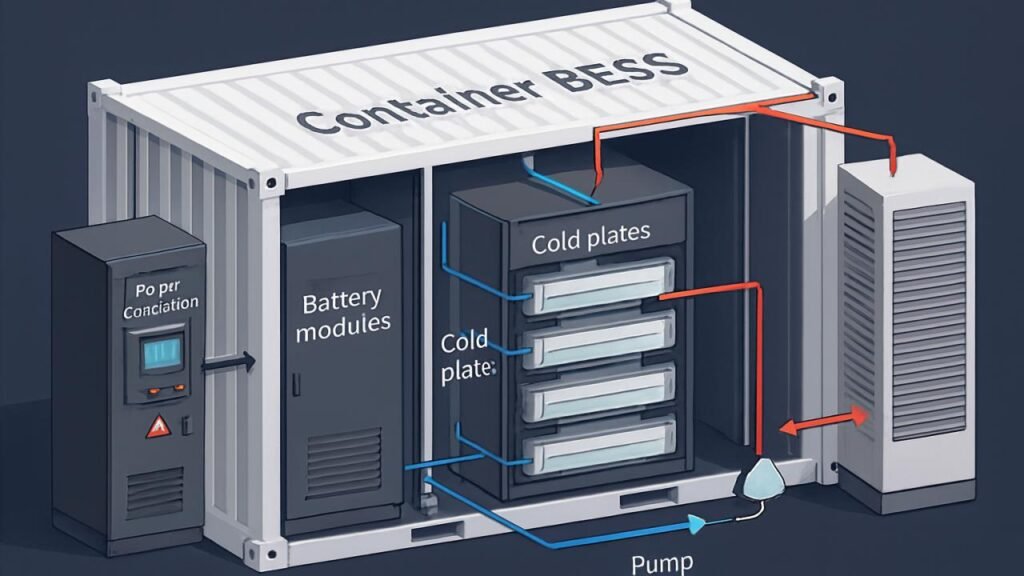
As Battery Energy Storage Systems (BESS) continue to grow in capacity, choosing the right cooling method has become one of the most important design decisions. Whether for commercial, industrial, or utility-scale projects, Liquid Cooling and Air Cooling each offer unique advantages depending on the application.
This guide explains the differences between the two technologies and helps buyers choose the best solution for their energy storage project.
What Is Air Cooling in BESS?
Air-cooled battery systems use fans and ventilation channels to remove heat generated by battery cells and electrical components.
Advantages
- Lower initial investment cost
- Simple installation and maintenance
- Fewer cooling components
- Suitable for small and medium-sized energy storage systems
- Reliable in moderate climate conditions
Best Applications
- Residential ESS
- Commercial ESS below 100–215 kWh
- Indoor energy storage installations
- Mild climate regions
What Is Liquid Cooling in BESS?
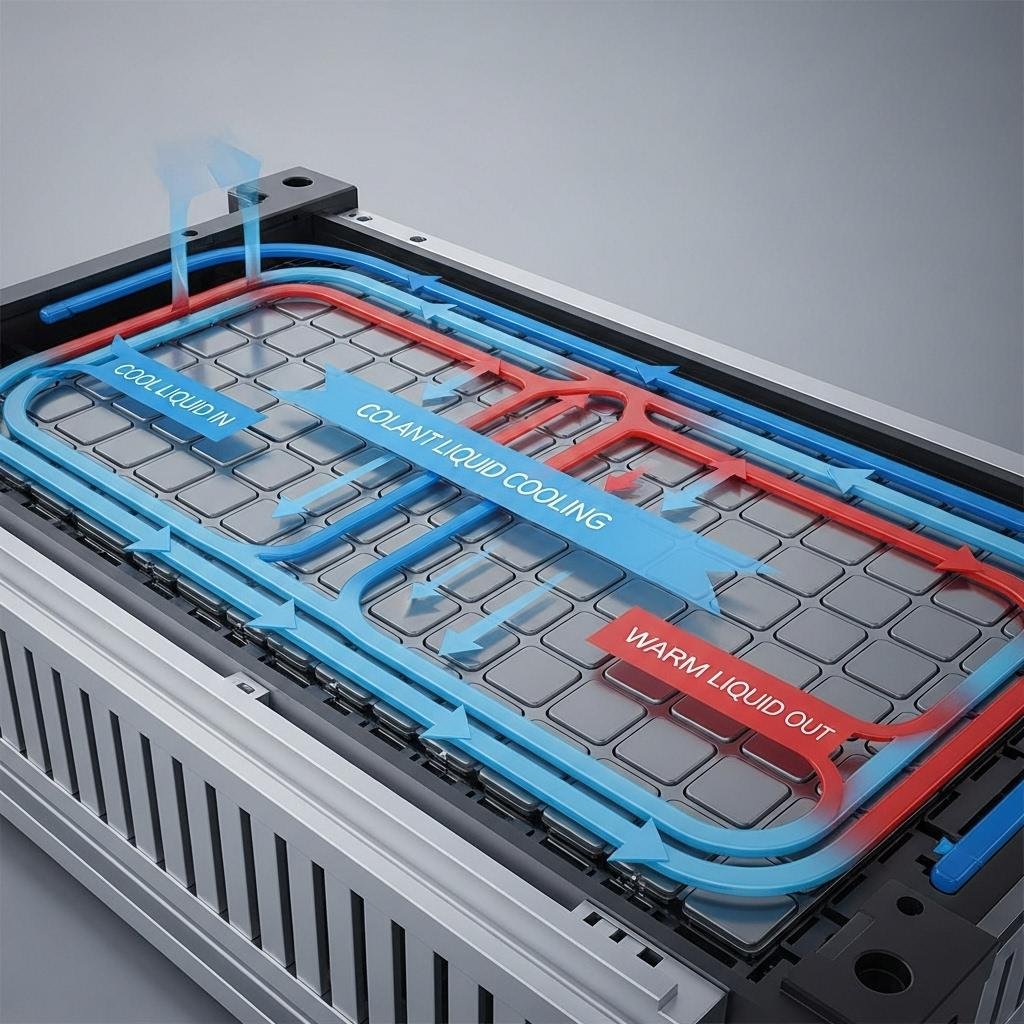
Liquid-cooled systems circulate coolant through dedicated cooling plates or pipes, efficiently removing heat from battery cells and maintaining a uniform operating temperature.
Advantages
- Higher cooling efficiency
- Better temperature consistency between battery cells
- Improved battery lifespan
- Higher energy density
- Lower operating noise
- Excellent performance in hot environments
Best Applications
- 215 kWh commercial BESS
- 372 kWh industrial energy storage systems
- 5 MWh containerized BESS
- Solar farms
- Microgrids
- Utility-scale energy storage
- AI data centers
- EV charging stations
Liquid Cooling vs Air Cooling
| Feature | Air Cooling | Liquid Cooling |
|---|---|---|
| Initial Cost | Lower | Higher |
| Cooling Efficiency | Good | Excellent |
| Temperature Uniformity | Moderate | Excellent |
| Maintenance | Simple | Professional maintenance recommended |
| Noise Level | Moderate | Lower |
| Energy Density | Medium | High |
| Suitable Capacity | Small to Medium | Medium to Large |
| High-Temperature Performance | Good | Excellent |
Which Cooling System Should You Choose?
For projects below 100–215 kWh, an air-cooled BESS is often a cost-effective solution with straightforward maintenance.
For 215 kWh, 372 kWh, and multi-megawatt containerized BESS, liquid cooling generally delivers better thermal management, improved battery consistency, and higher long-term performance. It is especially well suited for demanding applications such as renewable energy integration, industrial facilities, AI data centers, and large-scale commercial energy storage.
Ultimately, the right choice depends on your project size, operating environment, performance requirements, and total cost of ownership.
Conclusion
Both air-cooled and liquid-cooled Battery Energy Storage Systems have their place in today’s energy market. Air cooling offers simplicity and affordability, while liquid cooling provides superior thermal performance for larger and more demanding applications.
When selecting a BESS solution, consider not only the initial investment but also efficiency, battery lifespan, maintenance strategy, and future scalability.